

One of the more consequential decisions I have made in the last three years was also one of the least dramatic: I started spending less time online.
But instead of deleting my IG, Facebook, Twitter (I refuse to call it X) accounts, I simply became more deliberate about where I placed my attention. I wanted to be more present with the friends already in my life, more available to meet new people, and less willing to let the loudest argument of the day decide what I thought my country or my neighbors were like.
The effect was immediate enough to be unsettling.
People are hungry to talk, whether in coffee shops, bookstores, restaurants, or while standing in line at the airport. They readily talk to strangers when given a reason to believe the conversation is welcome. The most surprising part has been realizing how many of us are waiting for someone else to make the first move.
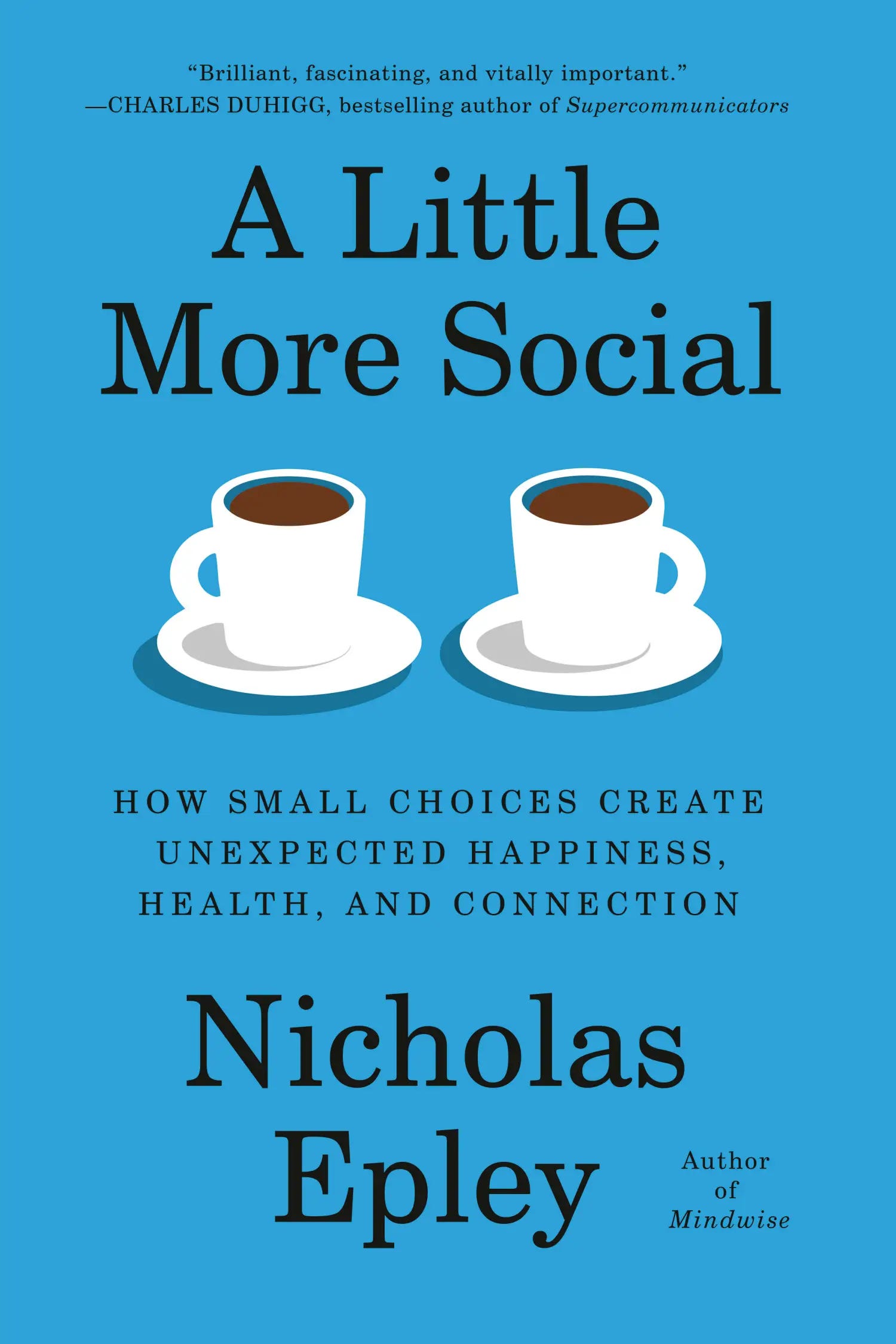
Nicholas Epley’s A Little More Social explains why. Epley, a behavioral scientist at the University of Chicago, studies the small decisions that determine whether we connect or retreat: saying hello, asking one more question, staying in a conversation past the moment when it would be easier to leave.
His argument, simple though it may be, has powerful, lasting implications: We regularly underestimate how interested other people are in talking with us. We predict awkwardness, rejection or indifference; then we avoid the exchange that could have challenged all three assumptions.
I have seen the civic version of this for years.
When I was a local elected official, I used to say everyone should run for office once and hope to lose. I meant it. Campaigning introduces you to the city you didn’t know you had been living in — the retired engineer worried about taxes, the young family stretched thin to stay in a neighborhood, the business owner stalled by permitting, the longtime resident who believes the place is leaving him behind.
You also meet people who email you about what sound like contrived inconveniences. Occasionally, if you stay in the conversation long enough, you learn they are mostly right. Or at least right about the part you did not know to see.
That is the education public life can provide, and it is increasingly scarce. We know labels better than people: liberal, conservative, developer, activist, woke, MAGA. Labels are efficient; they are also incomplete, which makes them an unreliable substitute for knowing what someone has lived through, what they fear, or what they are trying to protect.
My latest Dallas Morning News column is about Epley’s book and the ordinary contact that can correct bad information before it hardens into contempt.
An excerpt:
“As I finished A Little More Social, I kept thinking this would likely be the most valuable book I’d read all year. I also thought North Texas needs this lesson, and needs it now. Our communities are growing faster than trust can form. The schools, the politics, the people at the next table are all changing, and most arrive carrying histories the rest of us never see.
“The easy response is to retreat into familiar circles, news sources or accepted identities. The harder response is the simplest. Talk to the person you would rather summarize. Let the community become more specific than your opinion of it.”
Read the full column: Smith: Let’s be social without social media
Quote of the week
Each time he opens his mouth, the U.S. president sullies the name, image and spirit of the country and its people.
“The Trump era will be remembered as a period of supreme, grotesque, relentless demoralization, in which the person trusted with leading the United States did everything he feasibly could to destroy respect for the country even among its own citizens. Calling any American institution “so broken and vulnerable that no one can possibly defend it” is Trumpism at 100 percent purity. When someone tells you that his speech was a calculated “distraction” designed to steer public attention away from Iran or gas prices, they’re telling you that they still haven’t grasped that yet. The demoralization is the point. There’s nothing postliberals desire more.” — Nick Catoggio, The Dispatch