


Fight: Inside the Wildest Battle for the White House | Jonathan Allen and Amie Parnes
“Let there be no daylight between us.”
— President Biden to Kamala Harris, after she ascended to the top of the Democratic ticket
Fight isn't a postmortem; it’s a veritable exposé. Allen and Parnes strip away the gloss of campaign spin to reveal what really went down behind closed doors. Spoiler: loyalty politics, strategic cowardice, and a lot of people pretending they didn’t see the iceberg coming.
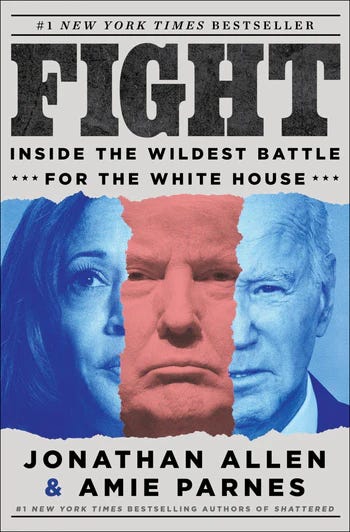
What the book is about and why you should care
This isn’t just a story of a failed campaign—it’s about the machinery that picked the wrong candidate twice, then refused to reroute. Harris wasn’t set up to succeed; she was set up to absorb the blow. If you’ve ever wondered how a party can talk so much about the future while clinging to the past, this book spills the tea.
Surprising revelations and key facts
Former President Obama only reluctantly endorsed Kamala as a presidential candidate: He stalled for five days after Biden stepped down. The delay wasn’t strategy; it was straight-up hesitation from someone who didn’t believe she could win.
Biden boxed her in: “No sunlight, kid” was the line he frequently used to prevent Harris from publicly challenging his policies even when the political moment demanded it. The so-called mentorship was effectively a muzzle.
The optics were staged, the fractures were real: Democratic insiders knew the campaign was on thin ice but kept pushing anyway.
Kamala was always the understudy, never the star: She inherited Biden’s team, Biden’s baggage, and Biden’s rules—with none of the power to change course.
What's the big deal?
The real story here isn’t that Harris lost; it’s that she was never truly allowed to run. Every power broker around her, from Obama to Biden, made it clear she wasn’t their first choice. And yet she was the only choice left. The party’s top brass built a system where criticism equals disloyalty, and ambition without permission is betrayal. That’s not strategy; that’s sabotage.
Key takeaways
Obama’s delay was deliberate: He saw the writing on the wall and didn’t lift a finger until it was too late.
Harris was never the heir apparent: She was the fallback—treated like a temp, not a leader.
Biden’s loyalty test stifled her: “No sunlight” wasn’t guidance; it was a warning not to step out of line.
The party was divided from day one: Internal mistrust, not Republican attacks, did the most damage. This was less true later on, but by then the damage was done.
It was avoidable: But egos, grudges, and fear of change made it inevitable.
Finally
Fight shows you how a campaign can collapse under the weight of its own blind spots. Harris was boxed in, not backed up. Obama knew it. Biden knew it. And now we all do. If you want to understand how political theater masks political failure, this book doesn’t flinch. It gives you the view from backstage.