



Off the dais is a recurring Ledger feature shaped by six years on the Southlake City Council. It looks past the public argument to the incentives and tradeoffs behind a decision, and the personalities and institutional habits that shape it.
Southlake's library is roughly 10,000 square feet. It’s so small, in fact, that when my daughters and I walked inside it for the first time, we asked the attendant, “Is there another location?” We had previously lived in Colleyville, where the two-story public library is multiples of ours. Despite its diminutive size, however, the library sees use and demand for services on par with that of the Allen, Texas, library, which is a gargantuan 71,000 square feet in a city whose population is well above 100,000.
A town our size should have something closer to 30,000 square feet. I ran on fixing that in 2019, and again in 2022.
I had the votes on paper, from both the community and the council, whose mayor and individual members supported the creation of a task force, which I helped spearhead.
The community groups who would have used the space supported it. What I didn’t have was a strategy for the activists who evaluate every municipal expenditure entirely through its ability to generate sales tax — and view any non-revenue-generating asset as a budgetary liability. Most of these residents, by their own admission, have never visited the library despite living in the city for decades.
I knew the opposition was lined up against us, but given council support, I felt that we were in good shape to press on in deciding a location and, ultimately, a timeframe for completion.
My confidence was misplaced.
The activists show themselves. The politicians retreat
Even before the formal announcement of the task force and the community meetings that would follow, the emails and phone calls began.
“Man, aren’t you running for office right now?” asked a friend in advance of my May reelection. “That’s not going to help you get elected.”
Once the video and the web article of the task force were live, the full-court press was on.
“Man, no one visits libraries anymore,” said another friend. “I haven’t been to a library in more than 15 years.” When I informed him that his comments were akin to saying we didn’t need a community gym because he doesn’t go to gyms, he admitted the flaw in his logic.
But he also gave me a warning.
“You’re going to find that many of the folks [on council] who support the idea of a library now will pull back [when their supporters start chirping].”
Translated: They won’t support the library if doing so costs them the support of their base.
When I pushed back that the library had always enjoyed broad community support, which cut across political lines, his final point was incisive:
“Anyone with higher political ambitions has to consider whether it’s worth the risk to be on a flyer championing an effort that results in the government spending money for a [project] that doesn’t generate revenue.”
How right he was.
The data didn’t matter
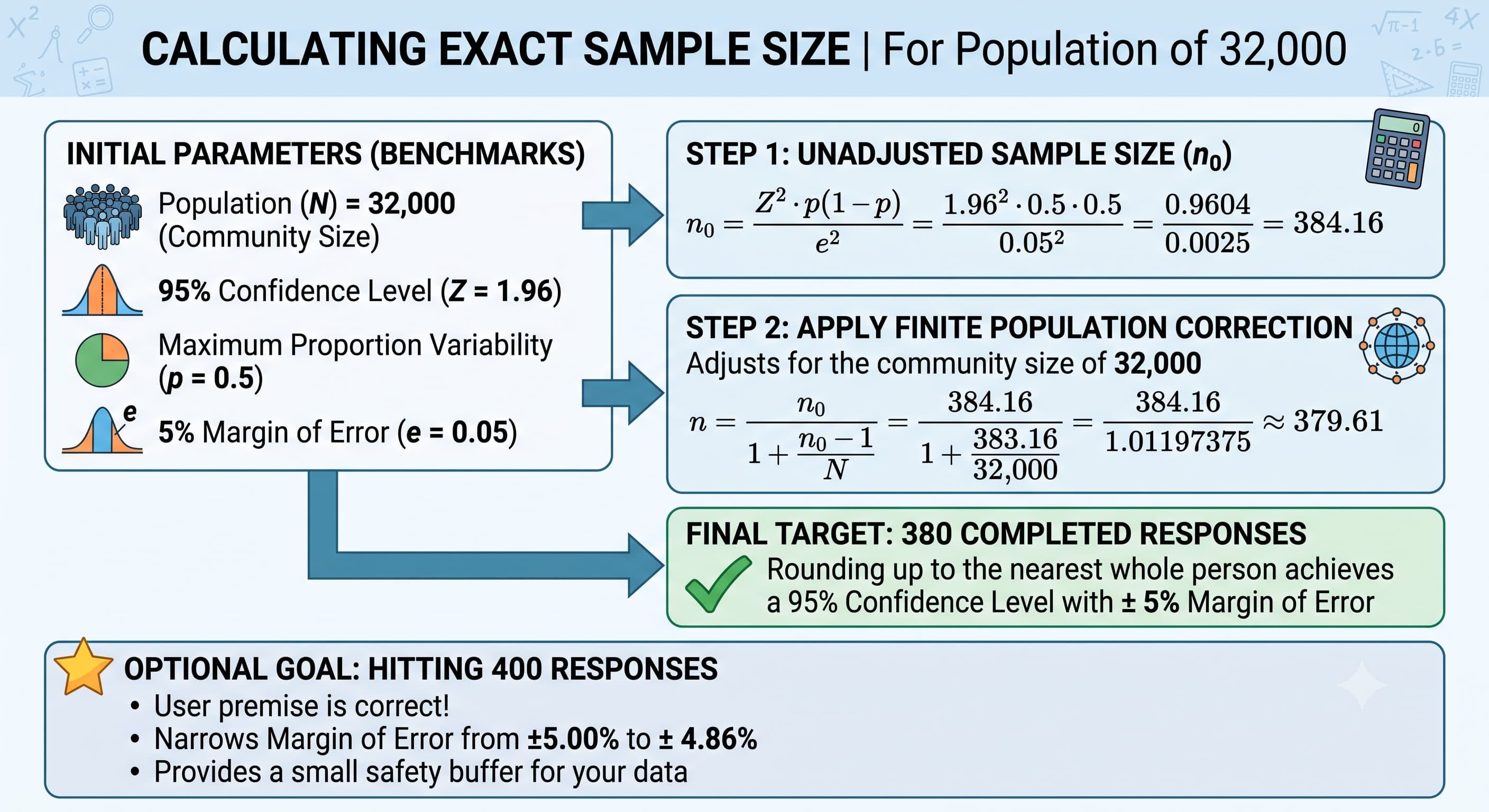
No matter how much data we had to support the community’s desire for a library, the opponents weren’t having it, with some going so far as to say the city’s sample size (thousands of respondents) was too small for a population our size. In response to one such Facebook message, I trotted out a graphic similar to the one below, but to no avail.
That group of activists unsupportive of non-revenue generating projects isn’t large, but it doesn’t need to be. A handful of committed voices is enough to make elected colleagues nervous, and nervous is usually all it takes. Support that was solid in private got quiet in public.
People blame me for that, and they’re not wrong to. I said I’d get it done. I didn’t. But the supporters’ unwillingness to do more than simply support the idea doomed—and continues to doom—the library project.
The fear that decides the vote
On contentious issues, politicians don’t respond to who’s part of the community. They respond to who votes, specifically who votes for them.
The people who wanted a library are a real constituency, but they are not a reliable voting bloc in a low-turnout municipal election. The small number of people who oppose nearly any public expenditure show up every cycle, without fail.
For elected offials, the deeper fear isn’t losing a general election. It’s the local version of a primary — your own base finding someone else to vote for. No council member wants to be the reason an activist voter stays home or recruits a challenger.
I know this because I sat on the other side of it. I watched colleagues who privately wanted the library go quiet in public, one at a time, until the votes weren’t there. I didn’t do enough to change their calculation. That’s on me, too.
Southlake still doesn’t have a library that fits the town it’s become. It has a 10,000-square-foot space and more than a decade of people asking what happened.
Spot on!
Excellent Article